Early in my career, I spelled GUI as “gooey” in front of the first person I ever managed.
Not G-U-I.
G-O-O-E-Y.
I can laugh about it now. At the time, it felt like evidence that I had been right about myself: I did not belong in technology.
I had never studied technology, yet I had somehow found myself in a technology role. Everyone around me seemed to speak a language filled with acronyms and concepts they understood instinctively. Now I was expected to lead someone in a field I was not convinced I understood myself.
Surely they could see what I had been trying to hide. I did not know enough. I was not technical enough. Someone had made a mistake by giving me the role.
One of the first things I had to learn, and have had to relearn many times since, is that not knowing something does not make me a fraud.
There were things I genuinely did not know. I was inexperienced. I made mistakes, sometimes publicly and occasionally absurdly.
Being inexperienced was not the same as being incapable. I could learn. I could ask questions. I could recover from getting something wrong.
I had assumed leadership meant having the answers. Over time, I noticed that many of the leaders I respected were comfortable saying, “I do not know, but I will find out.”
I did not need to pretend that I was the most technically capable person in the room. I needed to be honest about what I knew, curious about what I did not and clear about what I could contribute.
That realisation did not cure the feeling. It still appears when the stakes are high and I am already questioning myself. But I have become a little better at seeing what I do not know as part of being human, rather than evidence that I do not belong.
Learning to allow myself to be human was one thing. Remembering that the people who intimidated me were human too took a different kind of reminder.
A new senior leader was joining the organisation. Before I had even met her, people warned me about her.
“She is an iron lady.”
“She is hectic.”
“Be careful around her.”
By the time she arrived, her reputation had already filled the building. I was so intimidated that I avoided her. If I saw her in the corridor, I would wave and then quickly find a reason to turn in another direction.
One day, I saw her on her way to an important meeting. She looked under pressure. She was wearing a beautiful outfit, but there was a ladder running down her stocking.
It was a small, ordinary thing, but it changed something in me.
Until then, I had mainly seen her position, her reputation and the authority she carried. The ladder did not make her less powerful or capable. It reminded me that her title was not the whole person.
Instead of avoiding her, I walked over and wished her well for the meeting.
I did not deliver a profound speech. She may not even remember the interaction. I do, because it changed the way I approached her. I stopped holding her at arm's length, and we began to build a relationship. She became one of the leaders who shaped my career.
People sometimes suggest imagining an intimidating audience naked. I have never liked that advice. It suggests that I need to diminish people before I can feel equal to them.
I would rather remember the ladder in the stocking.
I did not need to make her smaller to feel less afraid. I needed to stop letting the title make her larger than human.
I had learned to see the person behind someone else's title. What I had not yet learned was how easily I could disappear behind my own.
When I was younger and beginning to move into leadership, I thought I was the bee's knees. I had energy, ambition and a growing sense that I knew what I was doing.
Eventually, I became closely associated with one area of my work. At first, I loved it. I had gone from spelling GUI as “gooey” to being recognised for something in technology. That felt like progress.
Then the label began to worry me.
What if it was all people could see? What if I had worked hard to be known for something, only to find there was no room for me to become anything else?
Over time, I began to notice that the subject matter was not the only thing I carried from one role to another. There was also the way I worked with people: the energy I brought, the attention I paid and my belief in what they could do.
Those things had been present before I knew much about technology. I hoped they would remain after a particular role or area of work had changed.
The work mattered to me. It was never the whole of me.
Then my life shifted again.
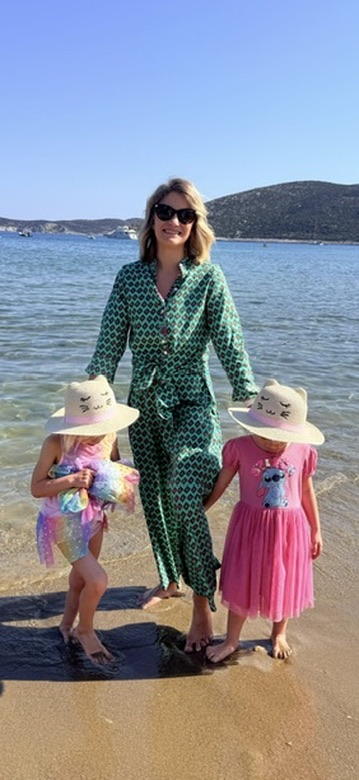
I went from being a twenty-something and the life of the corporate party to becoming a mother of two. Much of my life seemed to be divided between being a mother and being an employee. There was very little time or energy left to be anything else.
Recently, I was due to attend a conference overseas. My children became ill, and I had to decide whether to cancel the trip.
There were at least two versions of the obvious answer.
One was: “Of course you cancel. Your family comes first.”
The other was: “Of course you go. Your husband can look after the children.”
Neither captured how the decision felt from inside it.
I knew what I needed to prioritise. I knew my family came first. But knowing that did not make the decision easy.
I worried that cancelling would make me appear unreliable. I worried about letting people down and missing an opportunity. Part of me genuinely felt that I might be damaging my career.
In the end, I cancelled the trip.
It was the right decision for me, but it was not painless. Choosing my family did not remove my ambition, just as caring about my career did not make me a less devoted mother.
I used to think the answer was balance. I do not anymore.
Some seasons demand an imbalance. One part of my life needs more of me, which means another part receives less. This decision simply made clear which consequence I could live with: missing the trip and worrying about how it might be interpreted, rather than leaving when I knew I needed to stay.
Looking back, I can see that I kept mistaking one visible thing for the whole person. I treated a gap in my knowledge as the truth about my ability. I treated a title as the truth about a woman. Later, I became afraid that one professional identity might become the whole truth about me.
Perhaps this is part of why change at work can feel so personal. A new role, a changed title or a shift in direction may look like an organisational adjustment from the outside. From inside it, it can disturb the story someone has been telling about who they are. I know that was true for me.
The identity crisis was not really about choosing between career and motherhood. It was the fear that whichever role took up the most space would become the answer to who I was. But I am not one thing. Neither was she.